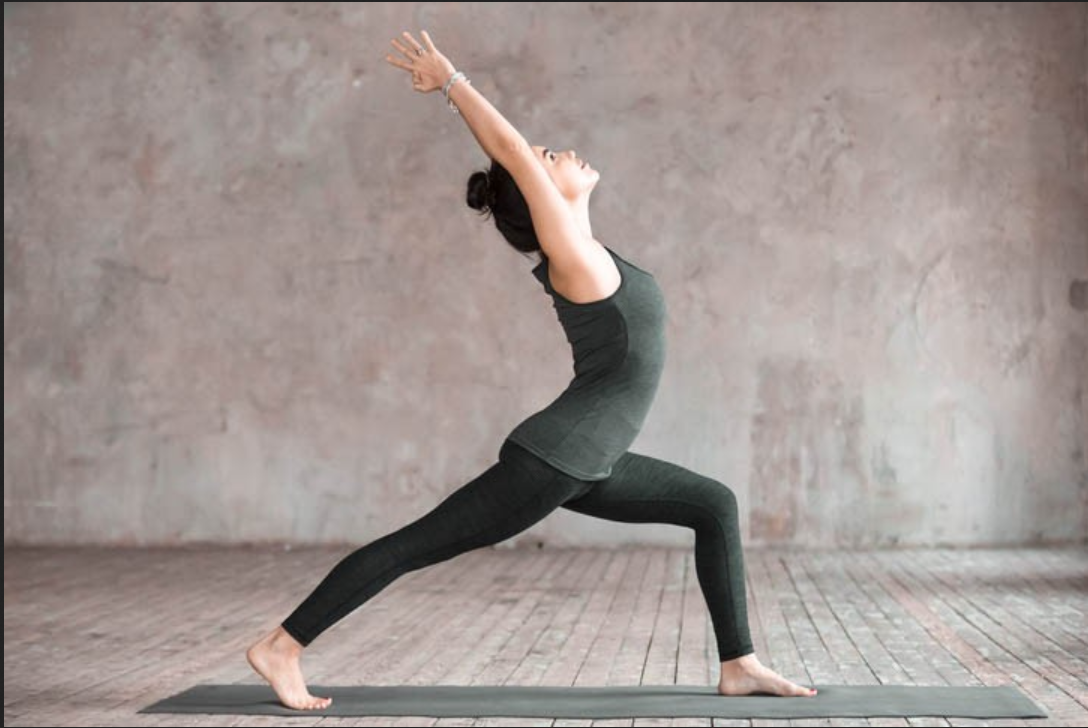
Vinyasa yoga is a flowing style of yoga that links every movement to a breath, so one posture melts into the next like a moving meditation. If you have ever taken a class where the room seemed to breathe together while bodies rose and folded in rhythm, you have already tasted Vinyasa yoga. In this guide, our teachers explain where this practice comes from, the principles that shape it, and exactly how Vinyasa differs from Hatha so you can choose the style that fits your body and your goals.
What Is Vinyasa Yoga, Really?
At its heart, Vinyasa yoga is movement guided by breath. Instead of pausing in each shape for a long count, you flow through a sequence where every inhale and every exhale cues a specific motion. Teachers often call it "flow" for exactly this reason.
Because the practice keeps moving, it builds heat, strength, and stamina in a way that feels almost cardiovascular. Moreover, no two Vinyasa classes need to look the same. A skilled teacher can arrange the same postures in countless orders, which keeps the practice fresh and creative.
This blend of structure and freedom explains its reach. By 2026, an estimated 300 to 350 million people practice some form of yoga across more than 190 countries, and Vinyasa now ranks among the most common styles taught in modern studios worldwide.
The Origins of Vinyasa Yoga
To understand Vinyasa yoga, you have to trace it back to one remarkable teacher. The story runs from a Himalayan cave to studios on every continent, and it is shorter than most people expect.
What Does "Vinyasa" Mean in Sanskrit?
The word Vinyasa comes from Sanskrit. It joins the root nyasa, meaning "to place," with the prefix vi, meaning "in a special way." Put together, Vinyasa suggests placing each step of your practice in an intelligent, deliberate order.
That definition matters. Vinyasa was never only about speed. Instead, it described a thoughtful arrangement, much like the ordered notes of a raga or the measured steps up a mountain path.
From Krishnamacharya to Modern Vinyasa Flow
The vinyasa method first appeared in the 1930s teaching of Tirumalai Krishnamacharya, widely called the grandfather of modern yoga. He began teaching in Mysore, India, in 1933 after spending more than seven years studying with his guru in the Himalayas.
His students went on to shape nearly every style practiced today. K. Pattabhi Jois systematized the flowing sequences into Ashtanga Yoga from 1948, while B.K.S. Iyengar, Indra Devi, and Krishnamacharya's son T.K.V. Desikachar each carried the teaching in new directions.
Pattabhi Jois used the word vinyasa in a narrow sense, meaning the linking movements between postures in a set series. Over the following decades, teachers in the West loosened that fixed structure and created the free-flowing "Vinyasa yoga" you find on studio schedules now. In short, modern Vinyasa is a creative offshoot of Ashtanga rather than a separate invention.
Core Principles of Vinyasa Yoga
Every genuine Vinyasa class rests on a few shared principles. Once you recognize them, the practice stops feeling like random movement and starts making complete sense.
Breath-Led Movement
Breath leads, and the body follows. Practitioners typically use a steady, audible breath, often Ujjayi breath, to set the pace and keep the mind anchored. As a result, the breath becomes a metronome that turns a workout into a meditation.
This link between breath and motion is the single most important feature of Vinyasa yoga. Remove it, and you are simply doing exercises. Keep it, and the practice calms the nervous system even as it works the muscles.
Sun Salutations as the Foundation
Sun Salutations, or Surya Namaskar, form the backbone of most Vinyasa sequences. These rounds warm the body, sync breath with movement, and prepare the joints for deeper postures. Teachers usually open a class with several rounds before branching into standing poses, balances, and backbends.
For beginners, mastering one clean Sun Salutation unlocks almost everything else. Because the flow repeats familiar shapes, students gain confidence quickly and can then explore more challenging variations safely.
Intelligent Sequencing and Focus
Sequencing gives Vinyasa its intelligence. A thoughtful teacher builds toward a peak pose, then guides you back down with counter-poses that restore balance. Alongside this, a soft gaze known as drishti helps steady attention and improve balance throughout the flow.
Vinyasa Yoga vs Hatha Yoga: The Key Differences
Here is where most students get confused, so let us clear it up. Technically, Vinyasa is a branch of the wider Hatha tradition, since both work with physical postures and breath. In a modern studio, though, the two labels describe very different class experiences.
The word Hatha combines ha (sun) and tha (moon), and it acts as an umbrella term for physical yoga. When a schedule lists a "Hatha class," it usually means a slower session with longer holds. A "Vinyasa class," by contrast, means continuous flow. The table below breaks down the practical differences.
| Feature | Vinyasa Yoga | Hatha Yoga |
|---|---|---|
| Pace | Continuous, flowing | Slower, with pauses |
| Pose duration | One breath to a few breaths | Several breaths per pose |
| Breath role | Cues every movement | Supports each held pose |
| Intensity | Higher, builds heat and stamina | Gentler, alignment focused |
| Best for | Building strength and endurance | Learning fundamentals and mobility |
| Class feel | Dynamic, moving meditation | Steady, grounding, precise |
So which should you pick? If you want a sweat and a challenge, choose Vinyasa yoga. If you want to slow down, refine alignment, or ease into yoga for the first time, Hatha is a kinder entry point. Many students, in fact, practice both across the week.
The Benefits of Vinyasa Yoga
The flowing nature of Vinyasa yoga delivers benefits that reach far beyond flexibility. Because it keeps the heart rate elevated, it works the body and the mind at the same time.
- Cardiovascular fitness: Continuous movement raises the heart rate, giving a light aerobic effect that static styles rarely match.
- Strength and mobility: Repeated transitions such as Chaturanga build functional strength across the shoulders, core, and legs.
- Stress relief: Pairing breath with movement calms the nervous system, which is why so many people leave a flow class feeling lighter.
- Better focus: Following breath cues trains concentration, a skill that carries into daily life and work.
These outcomes help explain yoga's steady rise as a wellness practice. Industry analysts at Fortune Business Insights valued the global yoga market near 68 billion US dollars in 2026 and expect it to keep growing at roughly 7 percent a year, driven largely by demand for exactly this kind of mind-body training.
Is Vinyasa Yoga Right for Beginners?
Yes, beginners can absolutely start with Vinyasa yoga, as long as they choose the right class. Look for sessions labeled "slow flow," "level one," or "foundations," where the teacher breaks down each transition step by step.
Starting slowly matters for safety. A fast flow can hide sloppy alignment, so learning the building blocks first protects your wrists, shoulders, and lower back. Once those foundations feel solid, moving up to a faster class becomes both safe and enjoyable.
If you are unsure where you fit, a structured course removes the guesswork. Our upcoming training dates and pricing show which programs welcome complete beginners and which suit experienced practitioners ready to teach.
How to Deepen Your Vinyasa Yoga Practice?
Once the basics click, most students crave something deeper. Some want to understand the "why" behind each sequence, while others feel called to share the practice with others. Either way, immersion is the fastest path forward.
A dedicated teacher training does more than certify you. It rebuilds your practice from the ground up, covering anatomy, breath, philosophy, and the art of sequencing a safe, creative flow. Our 200-hour Yoga Teacher Training in Bali and Nepal is designed for exactly this leap, whether you plan to teach or simply want mastery. Graduates who wish to go further often continue with our 300-hour advanced training.
Prefer to explore the practice type by type first? Our guide comparing online versus in-person training can help you decide how to begin.
Ready to turn your Vinyasa flow into a calling?
Join a Yoga Alliance registered teacher training with Inner Yoga Training in Bali and Nepal. Learn to sequence, breathe, and teach with confidence.
Frequently Asked Questions About Vinyasa Yoga
What is Vinyasa yoga in simple terms?
Vinyasa yoga is a dynamic style that links each movement to a breath, so postures flow smoothly from one to the next. The name points to placing each step in an intelligent sequence rather than holding poses in isolation.
How is Vinyasa yoga different from Hatha yoga?
Hatha classes hold each posture for several breaths at a slower pace, which suits alignment and beginners. Vinyasa yoga keeps the body moving in a continuous, breath-led flow, so it feels more cardiovascular and builds heat and endurance.
Is Vinyasa yoga good for beginners?
Yes. Beginners can start in a slow or level-one Vinyasa class where the teacher breaks down each transition. Learning Sun Salutations first gives new students the foundation they need before joining a faster flow.
Who created Vinyasa yoga?
The vinyasa method first appeared in the 1930s teaching of Tirumalai Krishnamacharya in Mysore, India. His student K. Pattabhi Jois then systematized it into Ashtanga Yoga from 1948, and modern Vinyasa flow grew out of that lineage.
How often should you practice Vinyasa yoga?
Three to four sessions a week is a realistic starting rhythm. Consistency matters more than intensity, so shorter regular practice builds strength, mobility, and breath control faster than occasional long classes.