QUICK ANSWER
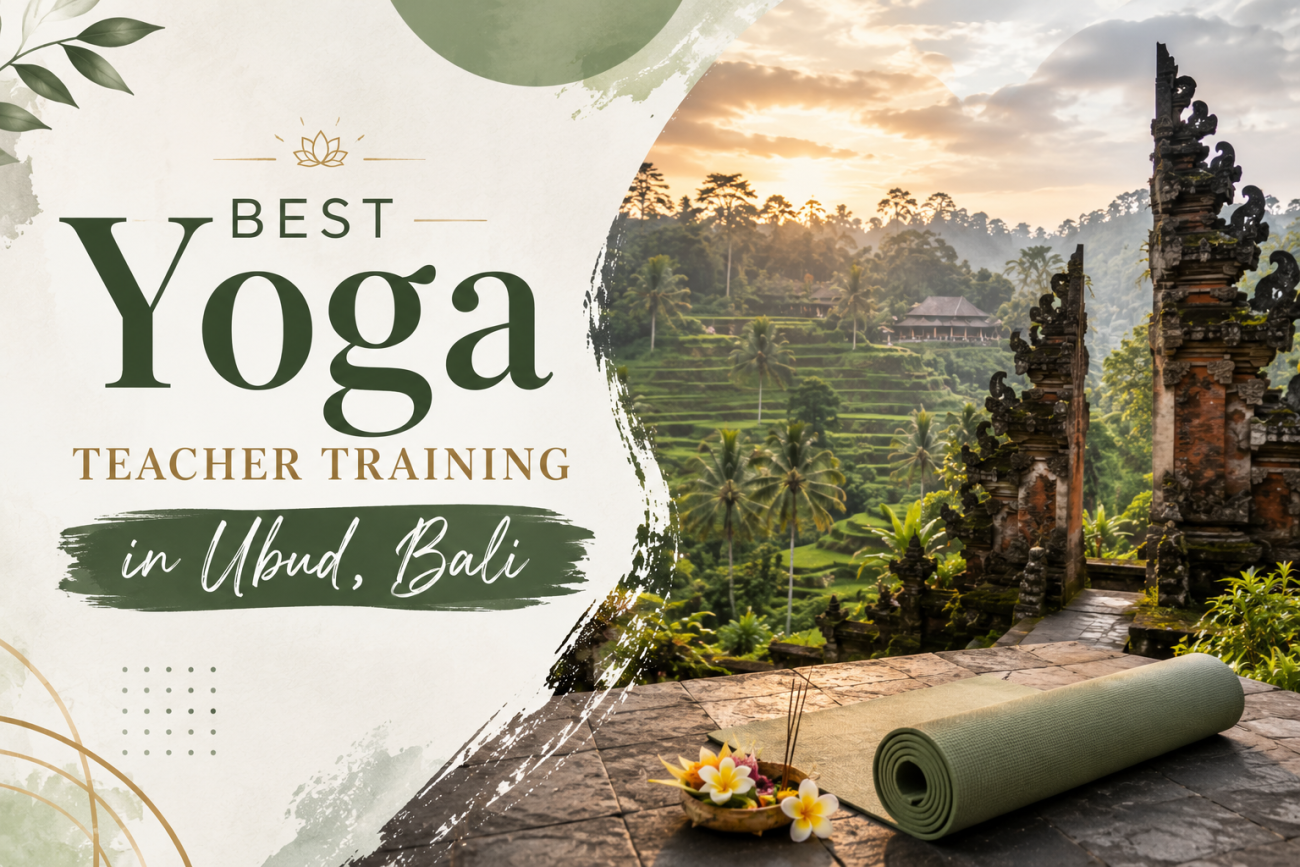
Ubud is Bali's inland yoga heartland, set among rice terraces and temples at around 300 metres elevation. It suits people who want their teacher training to function as a genuine retreat, with deep focus, nature and a long-established yoga community. Inner Yoga Training runs its 200-hour course here at Azadi Retreat, capped at 18 students, with dual Vinyasa and Yin certification.
If you are searching for yoga teacher training in Ubud, you have already found Bali's true yoga heartland. Ubud is less a location than a state of mind: a highland pocket of the island where the pace slows, the air smells of frangipani and incense, and the practice feels like it belongs to the place. Every year thousands of practitioners travel here specifically to complete their 200-hour training.
Why Ubud Is Bali's Yoga Heartland
Ubud sits at roughly 300 metres in the foothills of Bali's volcanic interior, encircled by rice paddies, tropical forest and the Campuhan Ridge walking trail. Mornings begin with gamelan from nearby temples and birdsong from the canopy. The setting is not incidental to the training; it shapes it, removing distraction and inviting depth.
The cultural dimension adds another layer. Ubud is central to Balinese Hindu life, with temple ceremonies almost daily and offerings lining the streets each morning. That living spiritual practice gives yoga philosophy an immediate, real context rather than an academic one. Over decades the town has drawn top teachers, whose students follow, which has built a permanent community of practitioners and healers that makes genuine connection easy.
What Training in Ubud Is Really Like
A typical Ubud training day starts early, with morning practice often between 6:00 and 7:00, followed by breakfast and classroom sessions on philosophy, anatomy or methodology. Afternoons bring practicum teaching, a second practice, or rest. At Inner Yoga the day runs from a 6:30 meditation and pranayama session through to dinner at 7:00, with rest deliberately built in and three full days off across the course.
Evenings in Ubud are quieter than on the coast. You are more likely to find a lecture, a sound healing session or a temple ceremony than a bar, and for many trainees that is precisely the appeal. The food scene is extraordinary and largely plant-based, which matters when you are practising twice a day, because what you eat directly affects your energy and recovery.
The Strongest Ubud Programs, and How to Vet Them
Inner Yoga Training's Ubud program is one of the most complete 200-hour offerings on the island. The roughly three-week immersion certifies you in both Vinyasa and Yin and adds anatomy, philosophy, Ayurveda, Traditional Chinese Medicine, meditation and pranayama, with a Business of Yoga module to prepare you for real work. It is built for all levels, including first-time trainees, and holds current Yoga Alliance RYS 200 status. For the full syllabus, see our 200-hour curriculum breakdown.
Several other schools run quality programs in and around Ubud, in areas like Penestanan and the Campuhan Ridge surroundings. Apply the same checks to any of them: current RYS registration verified in the registry, transparent curriculum, named experienced faculty, and consistent independent reviews. The full method is in our guide on how to spot an accredited, legitimate yoga school.
Costs and Living in Ubud During Training
Ubud is more affordable than most Western cities, though pricier than the rest of Bali after a decade of growth. If your program is all-inclusive, your in-course personal spending is mainly the occasional extra. Inner Yoga's 200-hour fee, from 2,750 US dollars early bird, already covers accommodation at Azadi Retreat, three meals a day, airport pickup and your certificate, so there are no accommodation or meal costs to add during the training itself.
If you arrive early or stay on, Ubud offers accommodation at every price point, from simple rice-field guest houses to private villas with pools, and a full day of meals at the town's warung spots and health cafes is inexpensive by Western standards. Budget a modest daily amount for food and transport on your own days, and remember that flights, visa and travel insurance are separate from any program fee.
Is Ubud Right for You?
Ubud is the right base for your training if you answer yes to most of these.
You want an environment that supports deep focus and internal work.
You value nature, spiritual culture and quiet evenings over nightlife and beach access.
You are open to a plant-based, sattvic lifestyle for the training period.
You want to be surrounded by a long-established, serious yoga community.
If the coast appeals more, read our companion guide to yoga teacher training in Canggu. For the full island overview, see our best yoga teacher training in Bali buyer's guide.
Ready to take the next step? If Ubud feels right, Inner Yoga Training's 200-hour program at Azadi Retreat is our recommendation: capped at 18, dual Vinyasa and Yin, fully
all-inclusive. Reserve your place or book a free call.
Frequently Asked Questions
Is Ubud good for a first yoga teacher training?
Yes. Ubud hosts several programs designed for practitioners without teaching experience, including Inner Yoga's. The key is confirming the program builds from foundational alignment and methodology rather than assuming prior teaching. About six months of regular practice is enough to start.
How much does it cost to train in Ubud?
It depends on inclusions. Inner Yoga's all-inclusive 200-hour course starts from 2,750 US dollars early bird, covering accommodation, meals, airport pickup and certificate. With an all-inclusive program your in-course personal costs are minimal; flights, visa and insurance are separate.
Is Ubud better than Canggu for training?
For depth, quiet and spiritual atmosphere, Ubud has the edge. For a social, beach-facing lifestyle alongside training, Canggu is strong. The honest question is which daily environment suits you, which we compare in full in the pillar guide.