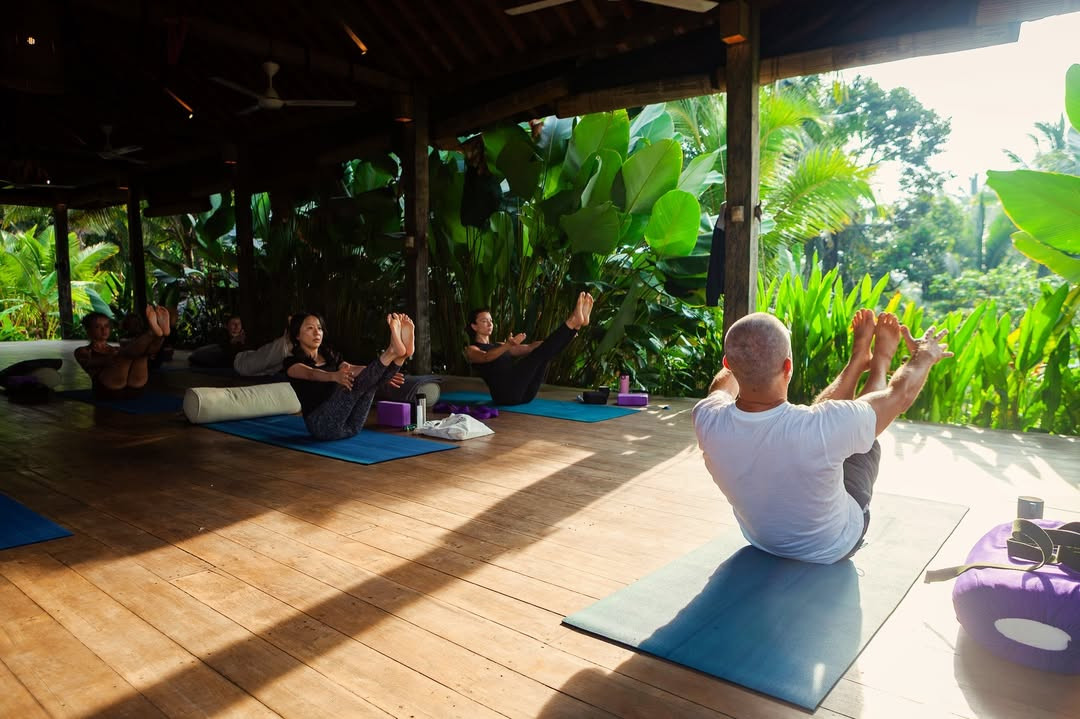
A 200-hour yoga teacher training in Bali is an immersive three-to-four-week journey that takes you from dedicated student to certified teacher, combining daily asana and pranayama practice with anatomy, yoga philosophy, and supervised teaching practicum, all on an island built for deep, distraction-free learning. This guide walks you through everything you can expect before you commit, from a typical day on the mat to what the certificate actually qualifies you to do.
Whether you want to teach professionally, deepen a personal practice, or simply step away from ordinary life for a month of growth, knowing what's ahead makes the decision far easier. Use the sections below as your roadmap, and follow the links to our deeper guides on cost, school selection, dates, and safety.
Why Train to Teach Yoga in Bali?
Bali has become one of the world's most popular destinations for yoga teacher training, and the reasons go well beyond the scenery. The island offers an unusual combination of affordability, established yoga infrastructure, and a culture that genuinely supports a contemplative lifestyle.
The island as a learning environment
Towns like Ubud sit at the spiritual heart of Bali, surrounded by rice terraces, temples, and a long-standing community of teachers and practitioners. Coastal areas such as Canggu add a more energetic, social atmosphere. In either setting you train inside a purpose-built shala, eat fresh plant-forward food, and spend your free hours somewhere that naturally encourages reflection rather than distraction. That environment does real work: it removes the friction of everyday life so your attention can stay on the practice.
Who a 200-hour TTC is really for?
The 200-hour training is the foundational, internationally recognised qualification, the entry point to teaching. It suits committed students who can hold a basic practice and want structure, depth, and certification. You do not need to be advanced or able to perform difficult postures. What matters more is curiosity, a willingness to be a beginner again, and the physical capacity to practise a few hours a day for several weeks.
What a Typical Day Looks Like?
Most Bali trainings run a full but rhythmic day, usually six days a week with one rest day. The schedule is intense by design immersion is the point but it settles into a sustainable rhythm within the first few days.
Morning Sadhana & Asana
Days typically begin early, around 6 to 7 am, with meditation or pranayama (breathwork) followed by a strong asana practice while the body is fresh and the air is cool. This morning block is where much of your physical progress happens.
Lectures: anatomy, philosophy, methodology
After breakfast the day moves into the classroom for the theory that turns a practitioner into a teacher: functional anatomy, the philosophy and history of yoga, and teaching methodology, how to sequence a class, cue clearly, and adjust safely.
Evening practice & self-study
Late afternoons often hold a second, gentler practice - restorative, yin, or a workshop on a specific topic followed by self-study, reading, or assignment time. Evenings are usually free, which is when the friendships that define a TTC tend to form.
The 200-Hour Curriculum, Explained
A Yoga Alliance-aligned 200-hour curriculum covers four core domains. Understanding them helps you read any school's syllabus critically.
Asana & Alignment
You will refine your own practice across the major posture families standing, seated, twists, backbends, inversions, and balances while learning the alignment principles and modifications that keep students safe.
Anatomy & physiology
Practical, teaching-focused anatomy: how joints move, where common injuries occur, and how to sequence around different bodies. This is what separates a confident teacher from someone simply demonstrating shapes.
Yoga philosophy & history
Study of foundational texts such as the Yoga Sutras of Patanjali and the eight limbs of yoga, plus the history and lineage of the tradition you are stepping into. This context gives your teaching depth beyond the physical.
Teaching methodology + practicum
The skill of teaching itself: cueing, demonstration, use of voice, hands-on and verbal adjustments, theming, and class management. You'll practise teaching your peers throughout, building to leading full classes by the end of the course.
How Long It Takes & The Formats Available?
3–4 week intensive vs part-time
In Bali, the standard format is a residential intensive of three to four weeks, training six days a week. This is the fastest route and the one that delivers the full immersion experience. Some schools also offer part-time or modular options spread over a longer period, which suit people who can't take a month away but mean a slower, less immersive path. For a deeper look, see our dedicated guide on how long a Bali YTT takes.
What's Included
Most Bali residential trainings bundle tuition, course materials, accommodation, and many or all meals into a single price but the details vary widely between schools. Commonly included: training hours, manual and materials, certification, daily meals, and accommodation for the course duration. Commonly extra: international flights, visa costs, travel insurance, airport transfers, and optional excursions or treatments. Always read the inclusions list line by line; our article on what's included breaks this down in full.
How Much It Costs?
A 200-hour residential training in Bali in 2026 typically ranges from budget options around the lower end through to premium courses at the higher end, with most quality programs sitting in the middle. The headline tuition is only part of the picture flights, visa, insurance, and spending money all add up. Our full cost breakdown lays out a realistic sample budget so you can plan with confidence rather than guesswork.
Online vs In-Person Training
Online 200-hour trainings exist and can be Yoga Alliance recognised, but they can't replicate the immersion, real-time feedback, and community of an in-person Bali course. Online suits those who genuinely can't travel; in-person is the stronger choice for confidence and connection. We compare the two formats in detail, including how certification differs, in our online vs in-person guide.
How to Choose the Right School?
The right school comes down to accreditation, curriculum depth, the credentials of the lead teachers, class size, location, and honest reviews. Cheaper isn't always worse and expensive isn't always better; what matters is fit. Our school-selection framework gives you a practical checklist and the red flags to watch for.
Is Bali Safe Especially Solo?
Bali is generally a welcoming and safe destination, and a residential training adds a built-in community and support structure that makes it especially reassuring for solo female travellers. There are sensible precautions worth knowing, which we cover honestly in our guide to safety for solo female travellers doing a Bali TTC.
2026 Dates & How to Book Your Spot
Cohorts in Bali tend to be small and fill early, so the best months and most popular dates book out well in advance. The booking process usually runs application, deposit, then confirmation. See our 2026 dates and booking guide for the full schedule, deposit and refund details, and the practical steps to secure a place.
Frequently Asked Questions
Q: Do I need to be an advanced practitioner to enrol?
A: No. A 200-hour course is foundational. A regular, consistent practice and the physical capacity to practise a few hours a day are far more important than being able to perform advanced postures.
Q: Will I be certified to teach worldwide afterward?
A: If you complete a course run by a Registered Yoga School aligned with Yoga Alliance, you can register as an RYT 200 and teach internationally. Always confirm the school's accreditation before booking.
Q: What's the best time of year to train in Bali?
A: Bali's dry season, roughly April to October, offers the most reliable weather, while the green season can be quieter and cheaper. The right month depends on your priorities; cohort availability also matters.
Q: Can complete beginners do a 200-hour TTC?
A: Many schools accept motivated beginners, though you'll get more from the experience with at least a few months of regular practice behind you. Check each school's prerequisites.