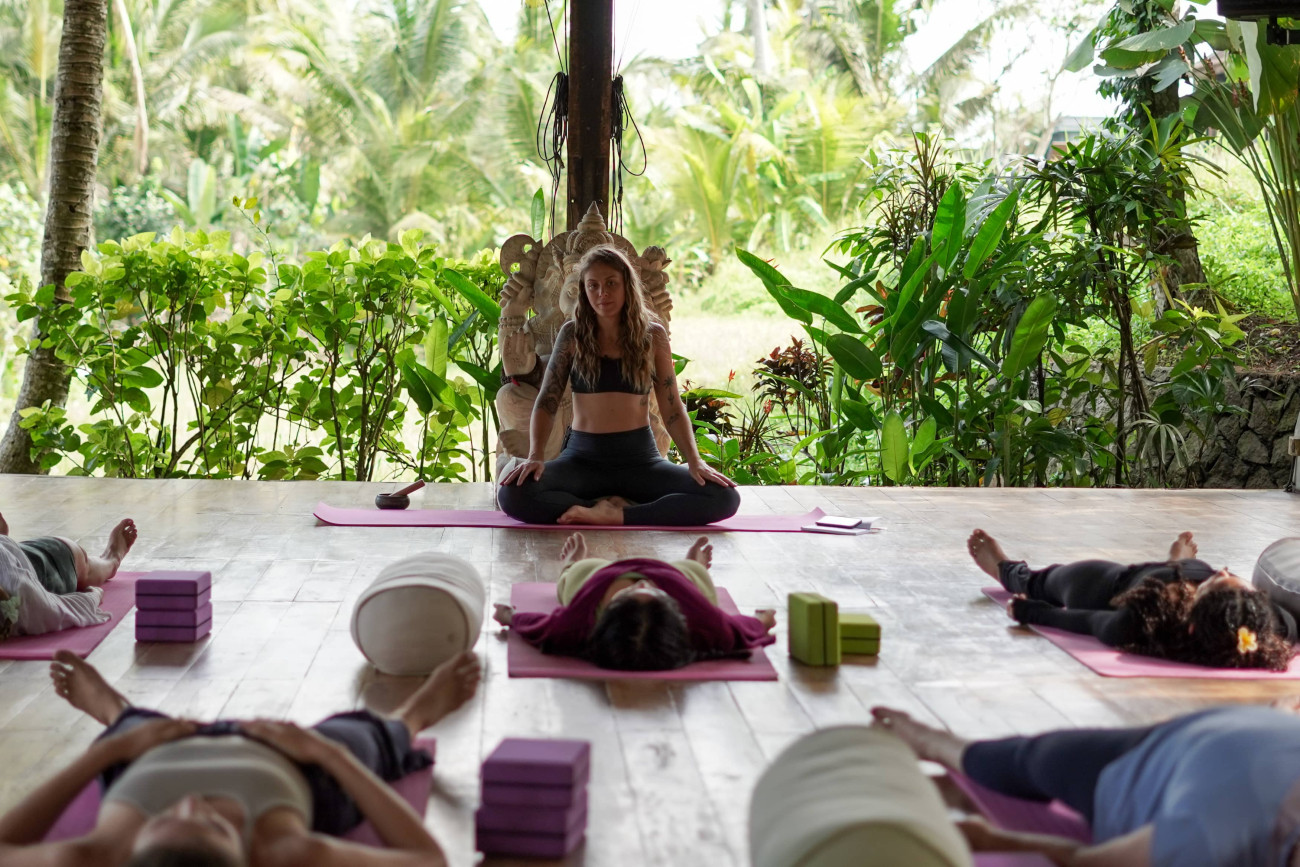
A 200-hour yoga teacher training in Bali usually takes three to four weeks to complete as a residential intensive, training six days a week. Part-time and online formats spread the same 200 hours over a longer period, anywhere from a couple of months to several. The intensive is the most common and immersive route, and the one most students travel to Bali for.
The Short Answer
If you're doing a full residential course in Bali, plan for three to four weeks on the ground, plus travel time on either side. That compressed schedule is what makes the experience so transformative, and so demanding.
Intensive vs Part-Time vs Online Timelines
The intensive packs your 200 hours into roughly a month of daily practice and study, fast, immersive, and ideal if you can take the time off. Part-time formats stretch the training across weekends or modules over two to three months or more, which suits people balancing work or family but loses the immersion. Online courses are typically self-paced within a set window, offering the most flexibility and the least intensity. The total learning hours are the same; only the calendar changes.
200-Hour vs 300-Hour: Duration Difference
The 200-hour is the foundational qualification and the three-to-four-week benchmark most people mean by "teacher training." A 300-hour is the advanced follow-on, taken after you've gained some teaching experience, and runs longer, often four to six weeks as an intensive. Combined, the two make up the 500-hour standard, but they're almost always done as separate trainings at different stages.
What Affects the Length?
• Format, intensive (weeks) versus part-time or online (months).
• Hours per day, a heavier daily schedule compresses the calendar.
• Days off, most intensives include one rest day a week, extending the total span slightly.
• Certification level, a 300-hour advanced course runs longer than a 200-hour.
How Much Trip Time to Budget ?
For a residential course, budget the full course length plus a buffer. That means three to four weeks for the training itself, a day or two on each side for flights and adjusting to the time zone, and ideally a few extra days afterward to rest or explore Bali before flying home. Building in that buffer means you arrive settled rather than jet-lagged on day one, and you don't have to rush off the moment you graduate.
Frequently Asked Questions
Q: Can I finish a 200-hour TTC in two weeks?
A: Some ultra-intensive courses compress it that far, but two weeks leaves little room to absorb the material or build teaching confidence. Three to four weeks is the more common and balanced length.
Q: How long does the 300-hour take?
A: As a residential intensive, a 300-hour advanced training typically runs four to six weeks. It's taken after the 200-hour, usually once you have some teaching experience.
Q: Should I add days for travel and rest?
A: Yes. Budget a day or two each side for flights and time-zone adjustment, and ideally a few extra days afterward to rest and explore before heading home.